


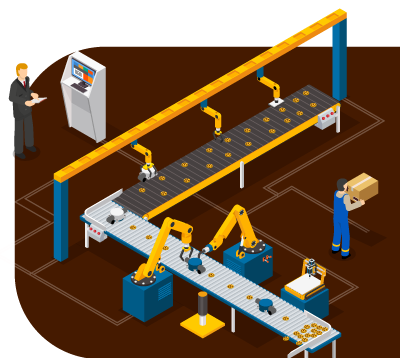
Efficient food production is a constant concern for the industry. Working in this market means dealing with perishable products that have a short shelf life.
That is why the food sector needs to adopt technological solutions that boost productivity and ensure better pricing. In the article below, see the benefits and the importance of this upgrade.
Industry 4.0: food production in the technological era
The reality of Industry 4.0 has been present in companies since at least 2011. Its concept brings together the most advanced digital solutions available. As a consequence — and because it is one of the most important sectors for the Brazilian economy — the food industry could not be left out of this upgrade.
Absorbing new technologies gave this sector the opportunity to better manage product batches and their shelf life, always prioritizing the foods closest to their expiration date.
An article written by production engineering specialists at the Federal University of Goiás highlights the need to use technology as a way to feed the world's population.
This possibility became real through the use of technologies driven by Agriculture 4.0, which is part of this fourth industrial revolution concept.
Among the systems available for the segment are:

Cloud technology: helps you waste less time uploading information and data into countless Excel spreadsheets that lack proper security. By using this resource, you can share data simply and quickly with other company employees from anywhere, in addition to storing important documents in a single repository. Routines end up becoming more productive, and management regains the power to make important decisions that will have a significant impact on the financial and administrative areas.

Traceability: this resource aims to simplify access to important data about a given product. Through it, you can check the quality, shelf life, and stock quantity of a given batch of products. This technology can be used through resources available on mobile devices, such as the QR Code, providing better visibility in logistics processes.

X-ray: X-ray inspection is an important ally for more efficient detection of fragments such as glass, plastic, metal, and even strands of hair inside food packaging. With this early detection, you can assure your customer that they are investing in a product that meets the highest standard of food safety.

Packaging: packaging has also received an important technological upgrade. Produced using 3D printing, it can flag damage to a food product by changing color. Another important feature of packaging technology is its ability to absorb substances that affect the food's shelf life, halting its degradation.

Big Data: thanks to its ability to store large volumes of data from the most varied sources, Big Data has become companies' main ally in recent years. In the food industry, this resource can help departments correct failures that impact product quality and merchandise pricing.
Shelf life and merchandise pricing
To achieve good quality in food products, you need to pay attention to the merchandise's shelf life and its impact on pricing.
So it is essential to know how to manage inventory well, storing items properly. This strategy should include the FIFO (First In, First Out) and FEFO (First Expire, First Out) valuation methods.
With an ERP used in production planning and control (PCP), these methodologies become simpler to execute, providing the opportunity to avoid food losses and the high cost of keeping these items in stock when there is no chance of selling them.
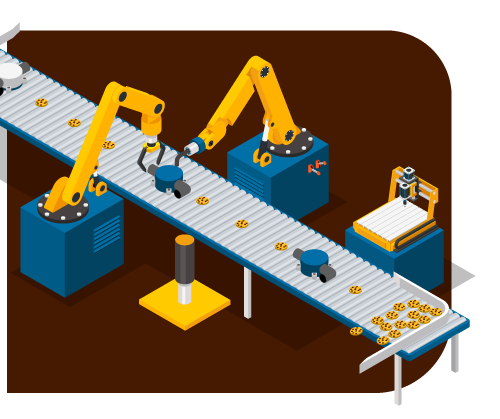
Food loss is one of the food industry's biggest concerns. According to data from a World Resources Institute study, Brazil loses around 15 million tons of food per year.
Within this estimate, 50% is lost during distribution logistics processes. One of the most frequent causes of this high percentage is the lack of more automated processes at the companies involved.
Benefits of using a PCP system for a food production line
Besides counting on fewer merchandise losses as a major benefit, this technological solution offers other advantages as well. Among them:

1 - A significant increase in profit margins
With less time spent on rework from the old manual processes, a food manufacturer achieves productivity gains that can directly impact profit margins. This is because, with employees more attentive and the system providing greater data security, the main risks are minimized and the company starts gaining again.
2 - Lower costs
The technology era has also made it possible to employ machines, which has provided greater support to employees and reduced costs with materials and waste.
3 - Production control and quality control
With process automation, your company gains full access to food production control — PCP — while also checking all the necessary information at every stage of the chain. In quality control, implementing an ERP makes inspection more assertive, improving important controls involved in food quality. Among the most common are temperature and pressure control, which are essential to preserving flavor and the food's other high quality standards.
4 - Better planning
By using an ERP system, you can better understand what works and what doesn't within your production processes. That way, the company can organize itself better and develop low-risk planning. The improvements Industry 4.0 brings to the food segment directly impact the end consumer's relationship with the product. By implementing an ERP system specific to this type of industry, you can offer better quality and food safety.
Learn more about how Useall solutions can positively impact your company's management, especially when it comes to the financial and administrative areas. Contact us!

Originally published in Portuguese at useall.com.br.