


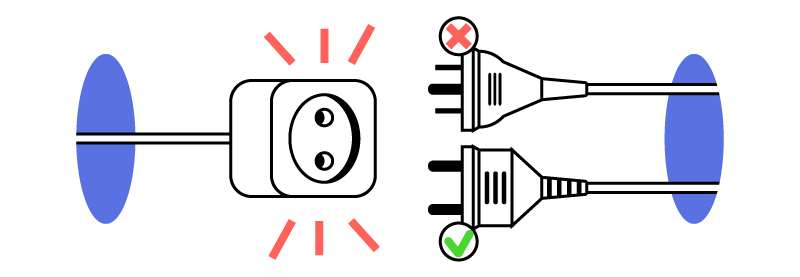
For many decades, industries adopted corrective actions to fix failures in their processes, as these were considered the best management alternative. Managing processes solely through corrective actions greatly harms performance, in addition to generating high costs.
For a company to operate with a focus on error prevention, risk mitigation, process improvement, and increased quality, there are countless tools and methodologies available. One of them is Poka Yoke.
In this article, learn what Poka Yoke is: a simple, objective tool for eliminating frequent errors in company processes, both on the factory floor and in administration.
What is Poka Yoke
The concept of Poka Yoke emerged in the context of Lean Manufacturing, a methodology created within the Toyota Production System by engineer Shingeo Shingo in the early 1960s to prevent risks of human failure and prevent errors in industrial processes.
Poka Yoke (loosely translated, "mistake-proofing") is a step-based method for avoiding human failures in a process. Over time, the methodology developed to such an extent that it is still used in quality management today.
It is a method that can both guarantee the ideal conditions for executing a process step, to avoid errors, and signal problems, speeding up the repair of the failure. Poka Yoke reduces the waste caused by defects, helping improve efficiency and save costs on rework or additional processing.
There are 4 types of the Poka Yoke method widely used in production processes:

Prevention - This type is the most common, and its purpose is to completely eliminate any error-generating cause. Some of these are: lack of professional training, high worker turnover on a production line, a disorganized work environment, inadequate operating conditions, and even an excess of manual activities.

Detection - Error-detection Poka Yoke can be applied in two ways: control and warning. The control method stops the process when an operational error occurs and forces its immediate resolution by attacking the root cause. The warning method, in turn, signals the appearance of the error through visual and/or audible cues.

Fixed value - This type aims to ensure that a specific number of movements has been performed during the process. In other words, it guarantees that all the parts of a device have been put in place so that it works correctly.

Steps - This method prevents failures related to execution order. That is, all the steps of an operation must be followed in the correct order. Otherwise, it will be impossible to perform the desired operation.
See some practical examples of the 4 types of Poka Yoke:
1- Prevention: In business, errors cost money and hurt the bottom line. Even when errors don't seem to have immediate consequences, Poka Yoke matters. Imagine an Excel calculation error, a spelling mistake, or a misdirected email. The spell-check feature in most word processing programs has helped reduce the number of errors. These are details that can harm a business negotiation and customer satisfaction, or bring high costs to the company.
2- Detection: Examples of detection control are circuit breakers, which interrupt power transmission in case of overload. As for the detection warning method, there are alarms or lights that signal there is a problem with a machine. When filling out online forms, some software won't let users click the submit button until they have completed all the required fields, preventing wrong or incomplete information.
3- Fixed value: A classic case is picking parts for assembly. Shingeo Shingo himself used this method at Toyota. He would place on a tray all the parts needed at a given stage of a car's assembly. If, at the end, any part was left on the tray, something was wrong.
4- Steps: A practical example is when a machine must execute a predefined sequence of steps, ensuring the complete execution of the process. Machines that, to start operating, require certain steps to be properly completed, such as two-hand activation or another type of safeguard.
Applying the Poka Yoke method
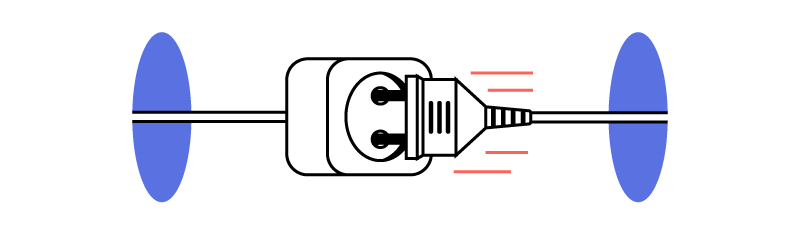
Implementing a good Poka Yoke tool is essential for preventing errors and making production lean. So, to help with this process, take a look at these 5 recommended steps:
1- Identify the failure
Check what is happening and what problem needs to be tackled. It is very important to do Value Stream Mapping. VSM is a form of process mapping that analyzes a product's workflow from the beginning, from raw material to the final result. This makes it easier to determine which failures cause the company the greatest losses and to create a priority list.
2- Find the causes
After discovering the problem, you need to know its cause. Investigate the process and see whether the failure is human or some equipment problem, and what type it is. It is very important to identify and react to nonconformities so that actions can be applied to correct them.
3- Analyze procedures
List possible solutions to the problem. Initially, try to understand how to prevent the failure. Using an action plan to bring discipline to processes is a good strategy. Management software can promote process improvement, since it centralizes information and stores it in the cloud, allowing online access to the system.
4- Continuous improvement
It is important to define the type of Poka Yoke to be used and hold team brainstorming sessions to generate ideas for Poka Yoke devices that help mitigate errors. Always remember that a Poka Yoke should be as simple and economical as possible.
5- Implement and control
Next, implement the chosen solution at scale within the organization and train your people in its use. Create a Poka Yoke standard as follows: error to be solved, action in case of emergency, method and frequency for checking the operation, quality verification method in case of a stoppage. Always monitor to know whether process quality has increased.
A company that has quality management software achieves process improvement, information control, and more reliable report generation for strategic decision-making.
Standout benefits include: increased production quality, higher productivity, better team performance, and reduced operating costs, in addition to greater customer satisfaction.
Originally published in Portuguese at useall.com.br.