



Currently, the concept of quality management has been widely discussed by companies around the world, a clear sign of the maturing of organizational culture.
This important culture has been going through notable transition phases. The concern, which used to be about understanding and implementing internal processes, has shifted to analyzing processes, identifying improvements, and creating a quality culture focused on optimization.
Companies are clearly entering a new stage of organization, taking a step forward with risk reanalysis, a concept that has proven to be a challenge for companies seeking continuous improvement.
Does your company already have this monitoring in place? Check out below the risk reanalysis model that is grounded in the ISO 9001:2015 standard and sets the course for the effectiveness of corporate actions.
Minimizing the negative effects of actions
Conducting periodic analyses is vitally important for planning, since the scenario undergoes changes that can render processes obsolete. This is where the need for a reanalysis arises.
That is the goal of reanalysis: to review the company's planning in order to identify the points that remain aligned with the company's needs and those that require changes.
The processes identified during monitoring that do not meet the expected standard are flagged as Nonconformity items.
Closer to your goals

With reanalysis, it is possible to identify the direction the company has been taking throughout the process.
This makes it possible to measure how far you are from your goals, allowing you to chart a new route that guides planning toward corporate success.
William E. Deming proposed the PDCA cycle - Plan - Do - Check - Act, which aims at continuous, cyclical analysis.
The model, proposed after World War II, is still widely used in companies today because it is an excellent, effective, and error-proof guide.
Reducing undesirable effects
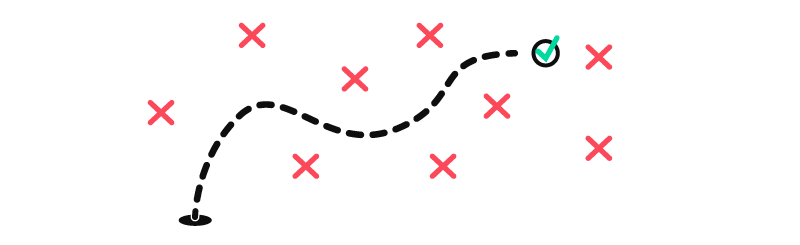
An excellent advantage of reanalysis is the philosophy of treating the "unexpected" as fully anticipated scenarios!
Mapping out routes of possibilities for every department in the company is essential, since with this practice the company shows it is prepared to face any kind of incident, relying on the practices needed to handle every possible situation.
Promoting continuous improvement

The foundation of the ideas behind reanalysis should be the notion of continuous improvement, promoting ever-higher levels of quality excellence.
A widely used model for this improvement analysis is Joseph M. Juran's, known as the Juran Trilogy.
The model proposes a tripod based on planning, control, and improvement.
In planning, ways to achieve high levels of quality in products or services should be proposed; in control, the existence of defects and the ways to fix them are verified; and in improvement, ways to promote the continuous improvement of processes.
Cost reduction
A major benefit of risk reanalysis is being able to count on cost reduction — money that would otherwise be spent solving problems that no longer exist.
By preventing problems from happening in the production process, the company saves on maintenance costs, allowing resources to be reinvested in quality planning.
For the process to flow as expected, the manager's support is indispensable — their role is fundamental in leading the teams toward the common goal!
The outcomes of risk reanalysis
In short, risk reanalysis can be summed up in three specific points. Check them out:
1. Identifying new risks:
The first of these points is identifying new risks. This analysis should happen periodically and rely on the support of everyone involved in monitoring.
With an engaged team, identifying problems becomes easier, since everyone is fully aware of all the processes and interacts very well with one another.
2. Reassessing current risks:
Moving on to point two, it is time to verify the standing of old risks. After all, if the improvement process is well established in the company, the probability of old risks occurring is lower — or even zero — making it possible to remove the item from the risk list, or it may still require monitoring.
Taking advantage of Industry 4.0 to carry out monitoring is highly recommended at this stage, as it offers excellent tools for data analysis.
A company that leverages technologies such as Big Data, Cloud Computing, and the Internet of Things is prepared to have an accurate analysis of all ongoing processes, enabling a more precise risk reassessment based on statistical data.
3. Closing out or monitoring risks:
The third point is carried out after verifying the old risks and the newly identified ones — it is the moment to update the planning.
This is where, following the foundations of the Juran Trilogy mentioned earlier, replanning takes place, addressing the company's new needs. This process must be transparent and rely on the support of the entire team. That is fundamental for collective progress and commitment.
Thinking about tomorrow
We can see that companies that invest in risk reanalysis are the ones that tend to achieve better results, identifying possible failures and correcting them, staying focused on progress, and delivering positive results to all stakeholders.
Follow the blog and stay up to date with information that will help you manage your business!

Originally published in Portuguese at useall.com.br.