


Whenever we talk about waste reduction and continuous improvement, one approach comes up: Lean Manufacturing, a philosophy created by automotive giant Toyota.
Today we will look at why your company should apply this methodology, just like other major brands, and which are the main Lean Manufacturing tools we can use.
Shall we?
What is Lean Manufacturing and what are its principles?
Lean Manufacturing, also known as Lean Production, is a lean manufacturing philosophy created in 1940 by Toyota, whose premise is to maximize customer value while minimizing waste.
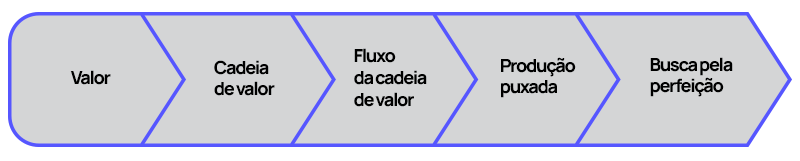
The philosophy is built on five key principles:

Value: understand what value means to the customer.

Value stream: map every step that adds value to the product or service.

Value stream flow: ensure work flows without interruptions or waiting.

Pull production: produce only what is needed, when it is needed.

Pursuit of perfection: promote continuous improvement across all processes.
These principles aim to reduce waste such as overproduction, waiting time, unnecessary transportation, inefficient processes, excess inventory, unnecessary motion, and defects.
Main Lean Manufacturing tools and techniques
For the company to reach the goal of Lean Manufacturing and follow its principles, it will need to use certain techniques and tools.

5S
5S is a methodology that promotes organization, cleanliness, standardization, and discipline in the workplace.
The five S's stand for:
Seiri: sort the necessary items from the unnecessary ones, eliminating what is not used;
Seiton: organize the necessary items efficiently, making them easy to access and use;
Seiso: clean and keep the workplace in good condition, preventing problems and improving morale;
Seiketsu: standardize the best organization and cleaning practices, ensuring everyone follows the same procedures;
Shitsuke: cultivate the discipline to maintain the established standards, promoting a culture of continuous improvement.
Once the company implements 5S, it drives behavioral change in people and processes, and achieves benefits such as higher quality in manufactured products, prevention of workplace accidents, and a boost in productivity.

Kaizen
Kaizen is another methodology that can help with the implementation of Lean Manufacturing. The method is based on the idea that everything in the company can be improved (labor, methods, materials, machines, etc.) through small adjustments.
These changes will ensure greater operational efficiency and continuous improvement.

Just-in-Time
Just-in-Time is a production technique whose goal is to produce only what is needed, at the moment it is needed. The idea behind applying Just-in-Time is to help the company eliminate waste in inventory, transportation, production, and so on, improving workflow and reducing costs.
The key elements of the Just-in-Time technique are:
- On-demand production;
- Inventory reduction;
- Process synchronization;
- Guaranteed quality;
- Continuous improvement.
PDCA
PDCA — short for Plan, Do, Check, and Act — is a tool that helps promote the continuous improvement of processes.
Plan is the planning stage, responsible for defining the objectives and the necessary processes. Do is the stage where we execute the plan. Check is the phase where we verify whether the expected results were achieved. And Act is the stage where we take the corrective actions needed to improve the process.

Kanban
Kanban is another interesting method the company can apply to manage production and the flow of activities. The system is based on visualizing tasks, limiting work in progress, and maximizing efficiency so tasks flow without interruptions.
Applying Kanban is quite simple and can be done on physical or digital boards. Tasks are visualized on cards that move through the different phases of the process.
READ ALSO | Production planning and control (PCP): what it is and how to implement it in manufacturing
Step by step to implement Lean Manufacturing
Lean Manufacturing has been implemented by many different companies seeking to use the philosophy to improve operational efficiency and reduce waste.
If that is your goal too, we recommend following the step-by-step guide below so your company truly reaps the benefits of lean manufacturing:
Define who is responsible for implementing Lean Manufacturing
Appoint a team or a leader to drive the implementation. This professional or team needs to know the Lean Manufacturing concept and the principles of the philosophy well in order to apply them correctly.
Map current processes
Document and understand the current workflow to identify areas for improvement. This documentation should describe how the processes work end to end — from the arrival of raw materials, for example, to the delivery of the final product.
Identify bottlenecks that may be causing inefficiencies
Analyze where the waste and obstruction points are. As with process mapping, provide documentation that clearly explains where the bottlenecks are and what is causing these inefficiencies.
Choose your Lean Manufacturing tool
Select the techniques and tools best suited to solving the problems identified in the previous step. You can choose 5S, Kanban, Kaizen, PDCA, or Just-in-Time. Pick the one your team or leader feels most prepared to apply.
Set the goals you want to achieve with Lean
Define clear, measurable goals for process improvement. Is it time reduction? Productivity gains? Cost reduction? Keep these objectives in mind and share them with everyone involved in implementing the Lean philosophy.

Define strategies and redesign processes to reach those goals
Create a detailed action plan to implement the necessary changes. The more detailed the plan, the better. Specify which activities will be carried out, who will be responsible for each task, what will change, and how long it should take.

Evaluate the results achieved with Lean Manufacturing and make the necessary adjustments
Monitor the results after applying Lean Manufacturing, compare them with the established goals, and make adjustments to ensure efficiency and the continuous improvement of operations.
Don't settle after making the first improvements, okay? Always reassess activities to identify potential problems, and implement actions to solve or prevent them.
The Lean Manufacturing philosophy has been applied for years by major brands such as Toyota, Nike, John Deere, and Caterpillar, among others. The success of these companies reinforces why other brands should also implement leaner manufacturing and follow good management practices if the goal is to reduce waste, improve operational efficiency, and deliver greater value to the customer.
Enjoyed the content? Keep reading the Useall blog and stay on top of every management topic!

Originally published in Portuguese at useall.com.br.